


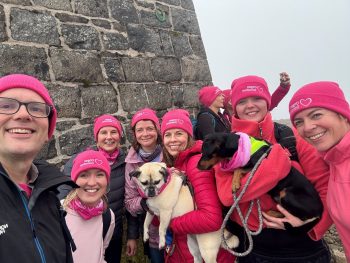
South Eastern Trust staff will take to the heights of Slieve Donard tomorrow as part of the ‘Turn the Peak Pink’ challenge to raise awareness of organ donation and the importance of sharing your wishes with loved ones.
Among those taking part will be staff from across the Trust, joining people from across Northern Ireland in climbing Slieve Donard dressed in pink as part of the annual Organ Donation Week challenge.
This year’s event carries particular significance for the organ donation community following the recent heart transplant received by young Dáithí MacGabhann.
South Eastern Trust, Clinical Lead for Organ Donation, Dr Chris Gowers, paid tribute to Daithi’s family and particularly his dad Máirtín, who has been a passionate supporter and advocate for organ donation.
Máirtín took part in the Slieve Donard challenge last year and will be remembered by those taking part as they make the climb this year.
Dr Gowers said, “Organ donation saves lives and transforms lives and Organ Donation Week gives us a really important opportunity to spread that message far and wide. We see the difference organ donation can make to patients and their families. In Intensive Care, we care for patients who sadly die with us and some of those patients go on to become organ donors.
“We have the privilege of meeting donor families afterwards and they tell us that knowing their loved one has been able to help save or transform the lives of others, brings them great comfort at an incredibly difficult time.
“Knowing that the gift of their loved one has helped somebody else live is a very important source of comfort for families.”
Dr Gowers is encouraging everyone to take the time to make their wishes about organ donation known.
Dr Gowers continued, “We know that the vast majority of people would like to help others live after they die. However, only around one per cent of people who die do so in circumstances where organ donation is possible, so every opportunity to donate is incredibly important for those waiting for a transplant.
“The most important thing people can do is make their decision known. Register your decision on the Organ Donor Register and importantly, talk to your family and next of kin about what you would want. Having that conversation means that your loved ones know your wishes and can support them if the situation ever arises.”
There are two main forms of organ donation, living donation and donation after death. Living donors can donate an organ such as a kidney to someone in need, including a relative, friend or in some circumstances someone they do not know. Donation after death can take place when a person dies in circumstances where organ donation is possible, including in an Intensive Care Unit.
Dr Gowers explained the ‘Turn the Peak Pink ‘challenge provided a special opportunity for people connected to organ donation to come together, “For the last few years, we have taken part in a UK-wide challenge on the final day of Organ Donation Week. In Northern Ireland, that means climbing Slieve Donard and we are expecting around 60 or 70 people to take part this year.
“It is a really lovely event because it brings together healthcare staff as well as people who have received transplants, families whose loved ones have become donors and people who are passionate supporters of organ donation. It is a chance for us all to think and reflect on the importance of organ donation and the way it can transform lives.”
Dr Gowers recalled taking part in the challenge two years ago alongside someone who had received a liver transplant, “She made it all the way to the top and all the way back down. It was incredibly inspiring to see.”
Encouraging those to take the opportunity to have a conversation with their loved ones, Dr Gowers added, “We know that people are generally very supportive of organ donation, but if someone dies in circumstances where donation is possible, it is really important that their family understands what they would have wanted.
“So please take a few minutes to register your decision on the Organ Donor Register and talk to your family about your wishes.
“You never know when that conversation might make a difference to somebody else’s life.”